
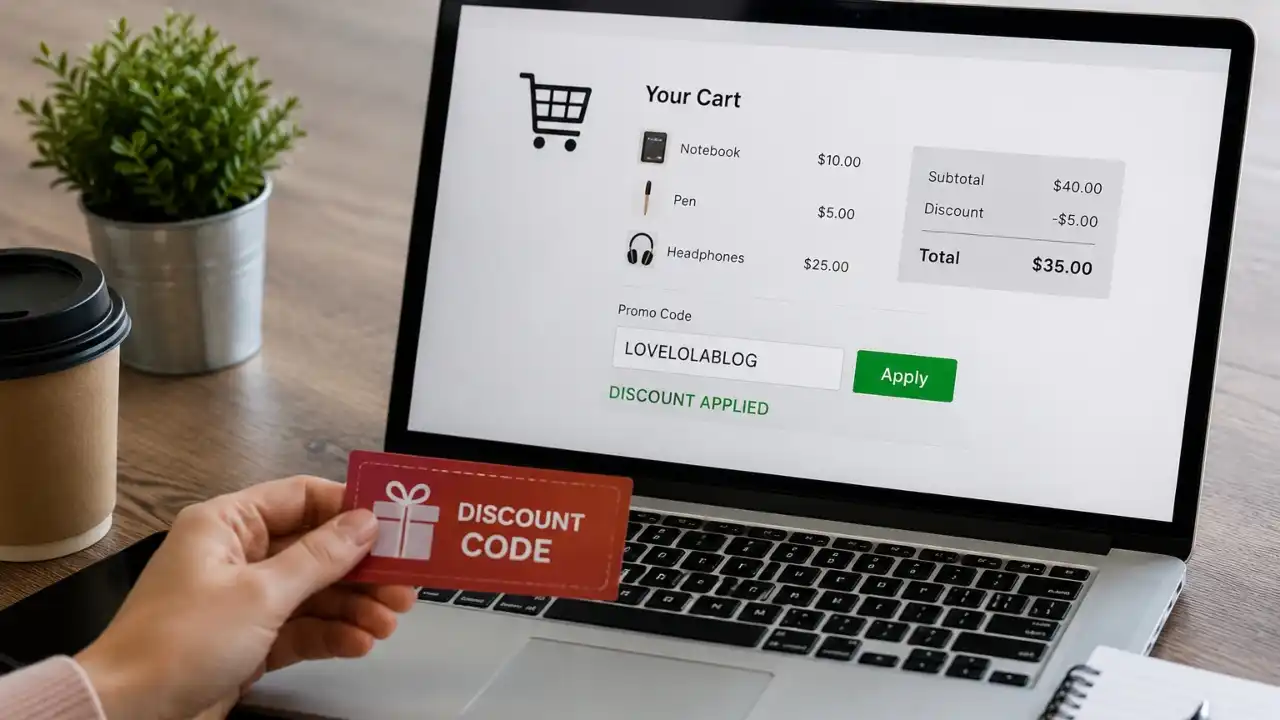
If you searched for codes LoveLolaBlog, you are probably looking for one of two things: promotional codes that can help you save money or code-related content that explains useful digital and technical topics. Because the phrase can have different meanings, finding the right information starts with understanding what type of code you need.
LoveLolaBlog-related search results have included content covering discount offers, promotional codes, lifestyle topics, and even coding tutorials. That makes it important to check the context of a page before using a code or following its instructions.
This guide explains how to approach codes LoveLolaBlog searches, how promotional codes typically work, and how to avoid common mistakes when trying to redeem an online offer.
What Does Codes LoveLolaBlog Mean?
The phrase codes LoveLolaBlog does not necessarily refer to one universal code or a permanent list of active coupons. Instead, people may use the search term when looking for codes, deals, offers, or information associated with LoveLolaBlog.
In a shopping context, a code usually means a promotional coupon that a retailer provides to customers. It might offer a percentage discount, free shipping, a fixed amount off an order, or another incentive.
For example, a retailer might provide:
- 10% off a first order
- $20 off purchases above a minimum value
- Free standard shipping
- A seasonal promotion
- A buy-one-get-one offer
However, the exact availability and validity of any code can change quickly. A code that worked last month may no longer work today, so readers should always verify the offer before completing a purchase.
How Promotional Codes Usually Work?
Most online discount codes follow a simple process. A retailer creates a unique combination of letters, numbers, or words and connects it to a specific promotion in its checkout system.
Imagine you find a code offering 15% off a $100 purchase. If the retailer allows the promotion to apply to the full order, the discount would reduce the eligible subtotal by $15 before any applicable taxes or delivery charges.
The actual savings may differ because retailers often attach conditions to promotional offers. A code could require a minimum purchase, exclude sale items, or apply only to new customers.
That is why the best approach is to read the conditions instead of assuming every code will work on every product.
Where to Look for LoveLolaBlog Codes
If you are searching for an active offer, start with the most direct and trustworthy sources.
1. Check the Relevant LoveLolaBlog Page
Look for articles or sections specifically dedicated to codes, offers, or promotions. Search results for LoveLolaBlog have included pages discussing discount and promotional codes, although the information on third-party pages may vary in accuracy and freshness.
2. Check the Retailer’s Official Website
This is one of the most important steps.
If a blog mentions a discount for a particular retailer, visit the retailer’s official website and check whether the promotion still appears there. Retailers often publish their own sales, welcome offers, and seasonal promotions.
This extra check can prevent you from relying on an expired or incorrectly copied code.
3. Look for Recent Updates
Discount information becomes outdated quickly. Pay attention to publication dates and update notes.
A page published several months ago may still rank highly in search results even though its listed codes have expired. For this reason, recency should be one factor you consider when deciding whether an offer is worth trying.
4. Read the Terms and Conditions
A code may look attractive but still provide little value if you cannot use it on the item you want.
Before checkout, check:
- Minimum spending requirements
- Expiration dates
- Product exclusions
- Geographic restrictions
- New-customer requirements
- One-use-per-customer limits
- Whether codes can be combined
These details often determine whether a promotional code actually saves you money.
How to Use a Code at Checkout
Once you find a relevant and potentially valid code, using it normally takes only a few steps.
Step 1: Choose your product.
Add the item or items you want to purchase to your shopping cart.
Step 2: Review the offer.
Confirm that your order meets the promotion’s requirements.
Step 3: Copy the code carefully.
Avoid adding spaces before or after the code. Some checkout systems treat extra characters as part of the code.
Step 4: Enter the code.
Look for a field labelled “Promo Code,” “Coupon Code,” “Discount Code,” or something similar.
Step 5: Apply the offer.
Click the relevant button and check whether the total changes.
Step 6: Verify the final price.
Do not assume the discount applied successfully. Look for the discount amount in your order summary before paying.
This last step matters. If the price does not change, the code may have expired, may not apply to your products, or may have additional restrictions.
What to Do When a Code Does Not Work
Finding a code that fails at checkout can be frustrating, but it does not always mean the retailer is misleading you.
Try these troubleshooting steps:
Check the Expiration Date
Many promotional offers run for a limited period. If the code has expired, look for a newer promotion.
Check Your Cart
Some discounts apply only to selected products or categories. Remove excluded products temporarily and test the code again if appropriate.
Check the Minimum Spend
A $10-off-$50 promotion will not work if your eligible order totals only $40.
Check Your Customer Status
Some offers target new customers, newsletter subscribers, or members of a loyalty program.
Try the Code Without Extra Spaces
Copying and pasting can sometimes introduce unwanted spaces. Entering the code manually may resolve the issue.
Look for a Better Deal
A promotional code is not automatically the best option. A retailer’s current sale may offer a larger discount than the coupon, or a free-shipping promotion may provide greater value for a smaller order.
A Real-World Example of Comparing Offers
Suppose you want to buy a $120 product.
You find three possible promotions:
- Code A: 10% off
- Code B: $15 off orders over $100
- Code C: Free shipping
If Code A reduces the price by $12, Code B saves $15, and shipping normally costs $10, the best option depends on whether the offers can be combined and what shipping method you need.
In this example, Code B gives the biggest direct discount, while Code C could become more valuable if the retailer charges expensive delivery fees.
This simple comparison shows why smart shopping involves more than finding the first code available.
Are All LoveLolaBlog Codes Genuine?
You should never assume that every code appearing online is current or valid.
The search results for LoveLolaBlog-related code content include pages describing promotional offers, but readers should still verify claims before relying on them. A responsible approach is to check the original source, confirm the promotion’s terms, and test the code at checkout before making a purchase.
Be especially careful with websites that promise unusually large discounts, ask for sensitive personal information, or redirect you through suspicious pages.
A legitimate discount should not require you to provide your banking password, security codes, or other confidential information.
Codes LoveLolaBlog and Coding Content
There is another possible interpretation of the phrase. Some search results use codes LoveLolaBlog in connection with programming and technical learning rather than shopping discounts.
In that context, “codes” could refer to tutorials, programming examples, development techniques, or practical coding guidance. One LoveLolaBlog-related result, for example, presents coding content as a learning resource for beginners and experienced developers.
If you are searching for programming information, look for pages that clearly identify the programming language and topic. A useful coding article should explain the problem, show an understandable example, and describe why the solution works.
For example, a beginner searching for Python code should look for content that explains the logic behind the example instead of simply copying a block of code without understanding it.
How to Get the Most Value From Codes
Whether you are searching for shopping promotions or code-related resources, the same principle applies: verify before you use.
For discount codes, compare the offer with current sales, check restrictions, and confirm the final price.
For programming content, check the publication date, test examples in a safe environment, and consult reliable documentation when working with software or security-sensitive code.
The best results come from using codes as a tool rather than treating them as a guarantee of savings or success.
Final Thoughts on Codes LoveLolaBlog
The search term codes LoveLolaBlog can lead to different types of content, so understanding your search intent is the first step. If you want a promotional code, look for recent offers, read the terms, and verify the promotion at checkout. If you are searching for coding information, focus on tutorials that provide practical explanations and real examples.
Most importantly, do not rely on a code simply because it appears in a search result. Check its source, confirm its conditions, and make sure it actually delivers value.
A good discount is one that works when you need it. A good coding resource is one that helps you understand what you are doing. In both cases, careful verification and practical judgment will help you get better results from your search for codes LoveLolaBlog.
For more informative articles, visit our site daily.
Regards