
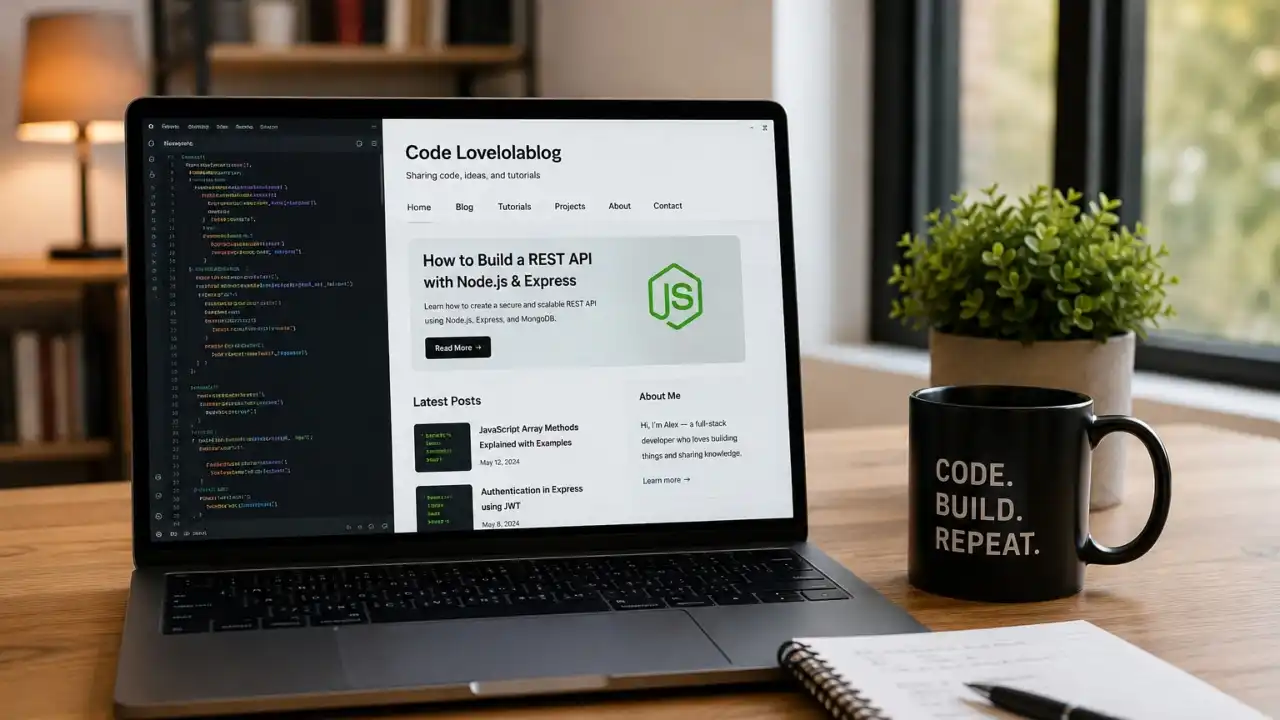
Starting a developer blog in 2026 is about more than publishing a few coding tutorials and waiting for Google traffic. Developers want practical answers, tested solutions, clear explanations, and content they can trust. If you can consistently provide those things, a technical blog can become much more than a side project. It can strengthen your professional reputation, attract clients, build an email audience, and create several potential income streams.
The code lovelolablog concept offers a useful starting point for anyone who wants to build a developer-focused publication. The real opportunity, however, comes from turning that idea into a focused content business built around genuine expertise, helpful resources, and a strong understanding of what developers actually need.
The demand for technical learning remains significant. The 2025 Stack Overflow Developer Survey collected more than 49,000 responses from 177 countries, and 69% of respondents said they had spent time learning new coding techniques or a programming language during the previous year. That means developers continue to search for information that helps them learn, troubleshoot, and improve their skills.
Start With a Specific Audience, Not a Generic Blog
Your first decision should not be which WordPress theme or hosting company to choose. It should be who you want to help.
“Developers” is an enormous audience. A beginner learning Python has completely different needs from a senior backend engineer working with distributed systems.
A focused blog could serve:
- Junior frontend developers
- Python beginners
- WordPress developers
- JavaScript professionals
- Freelance software developers
- AI application builders
- DevOps engineers
- Developers preparing for technical interviews
- Small businesses building their first web applications
The narrower your initial audience, the easier it becomes to create content that feels relevant.
For example, instead of publishing a broad article about “JavaScript,” consider a more specific direction such as JavaScript debugging for junior developers. You could then create content around browser debugging, asynchronous errors, API failures, performance problems, and common mistakes.
That approach gives your site a recognizable identity.
The code lovelolablog approach should begin with three questions:
- What do I know well enough to explain?
- Which problems does my target audience repeatedly face?
- What can I demonstrate from actual experience?
The strongest niche usually sits where these three areas overlap.
Build a Content Strategy Around Real Problems
Once you know your audience, create content based on problems rather than random keywords.
Suppose your audience consists of new React developers. Instead of publishing ten basic definitions, create a content cluster around practical development:
- How React Rendering Works
- Common React Performance Problems
- How to Debug React Components
- React State Management Explained
- Building a Production-Ready React Project
- How to Test React Applications
Now each article supports another. A beginner-friendly guide can link to a deeper tutorial, while the deeper tutorial can point readers toward a practical project.
This structure helps visitors navigate your expertise and gives search engines a clearer understanding of your site’s subject.
Before launching, create a list of at least 30–50 potential topics. Divide them into three groups:
Foundational content: Beginner guides that introduce important concepts.
Problem-solving content: Tutorials that answer specific questions and fix errors.
Experience-based content: Case studies, experiments, comparisons, and lessons learned from real projects.
The third category can become your competitive advantage.
A generic article may tell readers that database indexing improves performance. An experience-based article can explain how you identified a slow query, measured the bottleneck, added an index, and compared the results before and after the change.
That is the difference between repeating information and demonstrating expertise.
Make Every Technical Article Useful
Developers rarely need another article that simply defines a technology. They need help accomplishing something.
A strong tutorial should answer the reader’s question quickly and then provide enough detail to help them complete the task.
A practical structure might look like this:
What You Will Build
Explain the final result in simple language.
What You Need
List the programming language, framework, dependencies, or tools required.
Step-by-Step Implementation
Show the process in logical stages.
The Code
Use short, understandable examples instead of unnecessarily large code blocks.
Why It Works
Explain the reasoning behind the solution rather than asking readers to copy and paste blindly.
Common Errors
Mention problems readers are likely to encounter.
Testing and Improvements
Show how to verify the result and what they could improve next.
This approach creates a better learning experience and demonstrates genuine subject knowledge.
If you publish code, test it before publishing. Check the versions of libraries and frameworks you reference. If a solution depends on a specific version, say so clearly.
Technology changes quickly, so a tutorial that worked perfectly last year may require updates today.
Treat AI as a Tool, Not a Substitute for Expertise
AI has changed how developers search, learn, and solve problems, which creates both an opportunity and a responsibility for technical bloggers.
The 2025 Stack Overflow Developer Survey found that 84% of respondents were using or planning to use AI tools in their development process. At the same time, 46% said they distrust the accuracy of AI outputs, compared with 33% who trust them. The survey also found that 66% of developers were frustrated by AI solutions that were “almost right, but not quite.”
This is important for anyone publishing technical content.
AI can help you brainstorm topics, organize an outline, or identify possible approaches. But you should not publish untested code simply because an AI tool generated it.
A better workflow is:
Research → Draft → Test → Verify → Improve → Publish
If you use AI during research or writing, independently check important claims and test technical instructions yourself.
Your advantage as a blogger is not producing more words than AI. Your advantage is providing verified knowledge, context, judgment, and experience.
Design the Website for Developers
A developer blog does not need a complicated design. It needs a functional one.
Readers should be able to find information quickly, read comfortably, and copy code without frustration.
Prioritize:
- Fast page loading
- Responsive mobile design
- Clear typography
- Syntax-highlighted code
- Copy buttons for code blocks
- Descriptive headings
- Search functionality
- Simple category navigation
- Breadcrumbs where useful
- Accessible color contrast
- Minimal intrusive advertising
Avoid filling the page with unnecessary animations or pop-ups.
If a visitor arrives through a search result looking for a solution to an error, they should not have to fight through five advertisements and a massive introduction before reaching the answer.
Good user experience supports trust. It also encourages visitors to explore more of your content.
Create an SEO System That Supports Your Readers
SEO should help people discover your best work, not determine what you write about.
Start with search intent. A person searching for “Python tutorial” has a different goal from someone searching for “Python ModuleNotFoundError fix.”
The first may want to learn. The second probably needs an immediate solution.
Match the content to that intent.
Use descriptive titles, logical headings, useful meta descriptions, and relevant internal links. Connect related tutorials so readers can move naturally from beginner content to advanced material.
For example, a guide about deploying a Node.js application could link to articles about environment variables, API security, database configuration, logging, and performance.
Review your older articles regularly. Update obsolete commands, screenshots, dependencies, and recommendations.
Google’s current guidance emphasizes content created primarily to help people, with original information, analysis, and substantial coverage. It also recommends considering Who created the content, How it was produced, and Why it exists. Google specifically highlights first-hand expertise and a clear site purpose as useful indicators of people-first content.
For a developer blog, that means author bios, accurate bylines, tested examples, transparent explanations, and clear editorial standards can all contribute to a more trustworthy experience.
Grow Through Search, Communities, and Email
Google can bring new readers, but you should not build your entire business around one traffic source.
Create an email newsletter from the beginning.
Offer something useful, such as:
- A developer resource checklist
- A collection of coding shortcuts
- A beginner’s learning roadmap
- A downloadable project template
- A weekly programming tips newsletter
You can also repurpose your best content.
A detailed article about debugging an API could become a short LinkedIn post, a GitHub example, a newsletter lesson, and a video explanation.
Community participation can help you build credibility too. Answer relevant questions, contribute useful technical discussions, and share your articles only when they genuinely add value.
The 2025 Stack Overflow survey found that 82% of respondents visited Stack Overflow at least a few times per month, while developers continue to use the platform as a source of human-verified knowledge. This highlights the ongoing value of communities where developers exchange practical solutions.
The lesson is simple: be useful before being promotional.
Monetize After You Understand Your Audience
The code lovelolablog model should not treat monetization as the first priority. First discover what your audience needs. Then create products or services around those needs.
Affiliate Marketing
Recommend hosting, developer tools, books, software, or educational platforms you genuinely use. Explain your experience and disclose affiliate relationships clearly.
Sponsored Content
Technology companies may pay for relevant reviews, tutorials, or sponsored articles once your site develops an established audience.
Never allow sponsorships to compromise editorial trust.
Digital Products
You could sell:
- Coding templates
- Starter projects
- Premium tutorials
- Technical ebooks
- Developer checklists
- Project boilerplates
- Specialized courses
The best product usually solves a problem your audience has already demonstrated.
Consulting
Your blog can act as a public portfolio. A detailed case study showing how you improved application performance or solved a difficult deployment problem may convince potential clients that you know what you are doing.
Paid Communities and Memberships
Once you have a loyal audience, you could offer premium tutorials, private communities, live workshops, or expert Q&A sessions.
Do not launch everything at once. Test one revenue stream, measure results, and improve it before adding another.
A Practical 90-Day Launch Plan
The code lovelolablog roadmap can be broken into three simple phases.
Month One: Establish Your Foundation
Choose your audience and niche. Set up a fast, secure website. Create your About, Contact, Privacy Policy, and editorial information pages.
Publish five to ten genuinely useful articles covering your core topics.
Month Two: Build Topical Authority
Add supporting tutorials around your strongest subjects. Create internal links between related articles.
Start your email newsletter and begin sharing useful insights through relevant communities.
Track impressions, clicks, rankings, newsletter signups, and engagement.
Month Three: Improve What Works
Look at which articles attract impressions but receive few clicks. Improve their titles and introductions when appropriate.
Identify pages that receive traffic and add relevant internal links to them.
Update articles that need stronger explanations or newer technical information.
Then test your first monetization method based on what your readers actually want.
Final Thoughts
A successful developer blog is not simply a collection of articles targeting programming keywords. It is a resource that helps real people solve real problems.
Choose a focused audience. Publish content based on genuine questions. Test your code. Share what you have learned from experience. Keep your technical information current. Build relationships beyond search engines. Then monetize only when you understand how your audience wants to be helped.
That is what makes the code lovelolablog concept valuable as a starting point: it can become a structured platform where technical knowledge, practical experience, search visibility, and business opportunities work together.
In 2026, developers have more access to information than ever before. Your job as a blogger is not to add more noise. It is to provide the clarity, verification, and real-world context that saves readers time and helps them make better technical decisions. If you consistently do that, your blog can grow from a small publishing project into a trusted developer resource and a sustainable online business.